


“Haven’t you ever just wanted a chance to prove you can do something really great? To prove everyone wrong?”
Such is the question at the center of The Hula-Hoopin’ Queen, the new musical set to conclude the season at New York City Children’s Theatre, playing February 28-March 15 at Theatre Row.
Based on the popular children’s book by Thelma Lynne Godin, the plot follows spunky 10-year-old Kameeka Hayes, destined to be crowned the titular champion and finally beat her rival, Jamara Johnson, to become the best on the block in the circular sport. But when her mother reminds her of her neighbor’s birthday, Kameeka’s forced to put her plans on pause, putting her seemingly inevitable victory in jeopardy. Through an explanation of community, creativity, and care for the ones you love, Kameeka learns the true meaning of trust and family.
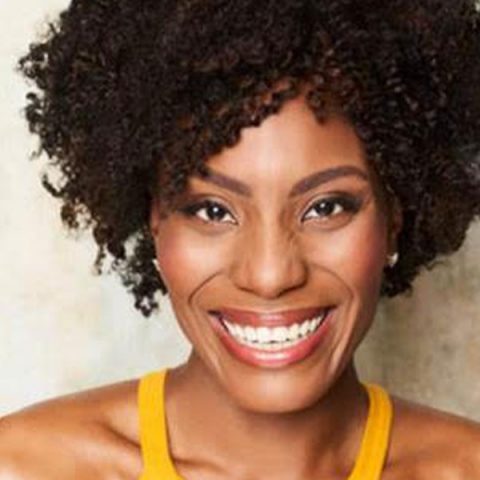
In spearheading the production, director Jasmin Richardson, a standout performer in her own right with roles in The Book of Mormon and the First National Tour of The Bodyguard and directorial credits such as The New Black Leading Lady and The Bubbly Black Girl Sheds Her Chameleon Skin, aims to empower women of color through highlighting the many facets of womanhood — all on display and explored in this piece — while maintaining authenticity in every word.
“We want people to come see themselves in these women,” she says in a statement, “and the journey of how they guide this young lady into making good decisions.”
In celebration of that pride and authenticity, in promoting the power of womanhood alongside the power of literacy, we spoke to Richardson about being on the other side of the stage, the importance of supporting independent theaters, prioritizing Black pride through the piece, and, of course, like Kameeka, what gives her “the itch.”
What drew you to this project? Why was this “the one” to do?
Interestingly enough, I was referred by [playwright] Tia DeShazor and [composer] Derrick Byars, with whom I had worked on The New Black Leading Lady. We had such a strong creative synergy. So, they reached out [to have me] meet with [Artistic Director] Barbara [Zinn Kreiger], and the rest was history.
This one felt like “the one” because I identify with almost every woman in this show. I know these women. They’re in my family. I recognize their nurturing, protective, loving energy. And Kameeka? I was that spunky kid. I know her spirit. So, it wasn’t just about the team — it was about seeing myself and my community reflected in the story. Once I read the script and the book, it was impossible to say “no.”
The production, as we said, is a musical adaptation of the original children’s book by Thelma Lynne Godin. How does adding music to the piece amplify this story? Why might adding in that element make the piece more accessible to audiences or easier to digest? And what do you gain that you might otherwise lose if the music element wasn’t there?
I love the book because it tells the story so succinctly. [Godin] already gave us the blueprint, so the music just allows us to expand on that blueprint. As a musical does, it gives depth and texture to these women in a way that dialogue alone can’t.
And then, because it’s a multi-generational story, the music [also] reflects that aspect. You hear jazz, R&B, funk... each genre representing a different era and a different woman. We get to know them not just through what they say, but through rhythm, lyrics, and tone. Music becomes another layer of character development.

And music is universal. It bridges generations. There’s something [in this show] for the adults, and there’s something for the children. It brings everyone into the same emotional space.
If the music weren’t there, the story would still be beautiful, of course, but you wouldn’t get the fullness of these characters. The music enhances their inner lives. It makes their emotional worlds bigger.
How is this production different from other works out there? Why should someone come to see it?
I think sometimes in Theatre for Young Audiences, the instinct can be to simplify or soften things. But children are incredibly smart. They’re instinctual. They understand much more than we give them credit for.
With this piece, we wanted to meet them where they are and then push them a little further. Yes, it’s a children’s story, but it’s layered. It’s grounded. It reflects real community... real responsibility... real pride. People should come see it because everyone wants to feel seen.
And it’s distinctly New York. The world can feel huge when you’re a child, especially in this city, but [on] your block, your neighbors, your teachers, your family... that community feels small and intimate.
That specificity matters. A lot of these young audience members live here. They’ll see their own world reflected back to them.
In your opinion, how does this story exemplify Black pride and the Black experience? Why is important to show that to audiences?
For me, Black pride in this piece is about fullness. I want Black audiences — especially young Black audiences — to see that they are enough exactly as they are.
So often, Blackness is the first thing people see, and assumptions follow. But in this show, these women aren’t defined by stereotype. They’re defined by love, discipline, humor, pride, [and] responsibility. They just so happen to be Black... and that’s powerful.
The way these characters care for each other, the way they hold each other accountable, the way they show up... that’s something every culture understands. But the specificity of Harlem, of Black history, of Black contribution to this city that matters. Representation on stage matters.
And even though we’re performing during Black History Month, pride in Blackness isn’t seasonal. It’s daily. It’s woven into the fabric of who we are. I think it’s powerful not only for Black audiences to see themselves reflected with dignity and joy, but for other communities to see us through a fuller lens. It helps them to recognize how much we contribute, and how deeply human and connected we all are.
As we said, you’ve previously directed twice, again debuting with Bubbly Black Girl Sheds Her Chameleon Skin, followed by The New Black Leading Lady. As an actor, is it important for you to get on the other side of the table? And if so, why? How does it compare? How does it help you onstage, if at all? How does it fulfill you, if at all?
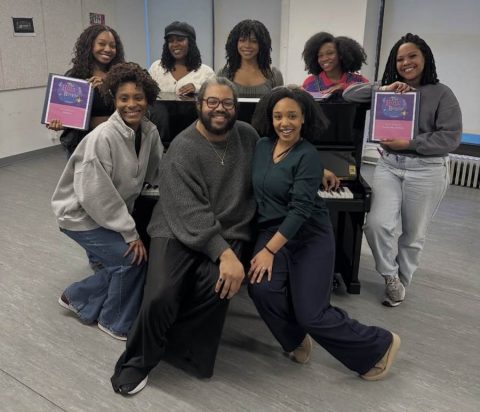
As an actor, you’re a vital part of the puzzle, of course, but you’re still only one piece. You’re focused on your lane, your character, your track in the storytelling.
As a director, you’re orchestrating the entire ecosystem. You’re making sure the designers, performers, music, movement everything is aligned and cohesive. It’s a completely different mindset. It’s macro instead of micro.
For me, what’s always been important is storytelling as a whole. Directing allows me to shape the story from beginning to end through months of preparation, through rehearsal, through opening, and even beyond. You’re holding the entire arc.
It’s also deeply fulfilling because I get to be intentional about the stories I choose. Directing is time-consuming, so if I’m saying “yes,” it’s because I’m passionate about it.
And I love being able to nurture actors especially younger or emerging performers. I’ve been in the room as an actor for years. Now, I get to guide and support others in that space. And that feels so purposeful.
Similarly, how does this experience compare with life at The Book of Mormon? Is there something cathartic about that balance, if at all?
I’ve been incredibly fortunate to be with The Book of Mormon for seven years. When you work on a show like that with a strong book and a score that still lands 15 years later, you start to understand what holds up. You feel the audience’s response every night. You learn what storytelling clarity feels like. So, when I’m reading scripts or listening to new music as a director, I then have a deeper sense of what to look for.
Not that every show should be the same. They’re all different, sure, but there are [similar] core elements of structure, rhythm, and payoff that you start to recognize in each one.
There’s also something really cathartic about the balance [between being actor and director]. During the day, I’m orchestrating a world shaping every element. At night, I step into something beautifully established. It’s almost meditative.
The New York City Children’s Theater prides itself on how it “inspires young people’s imaginations and supports social and emotional growth through original theatrical experiences.” Why is it important to support independent youth theaters like this one?
Supporting independent youth theaters like this one is vital. Resources for young people are already limited. So, when you find an institution that has the systems in place and is actively investing in children’s emotional and imaginative growth, that’s something worth protecting and supporting.
I deeply respect New York City Children’s Theater in terms of its mission, especially now, at a time when arts funding is being cut. You have to have purpose.
What I’ve experienced through working with them is that they truly live their mission. They’re not just saying the right things -- they’re doing the work.
I’ve seen it from the inside. They champion artists. They trust creative instincts. They create an environment where storytelling for young people is taken seriously. My relationship with them has been wonderful because of that trust and that clarity.
In press notes, you’ve spoken about how The Hula-Hoopin’ Queen is “a joyful story about a young girl growing up in Harlem learning responsibility, finding her confidence, and discovering the magic in her everyday world” and the official synopsis cautions, “[W]hile it’s great to chase your dreams, sometimes the most important thing is showing love and care for those around you” and “celebrat[e]… family and community.” Can you speak to why it’s important to highlight these ideals, especially among young children and at this point in time?
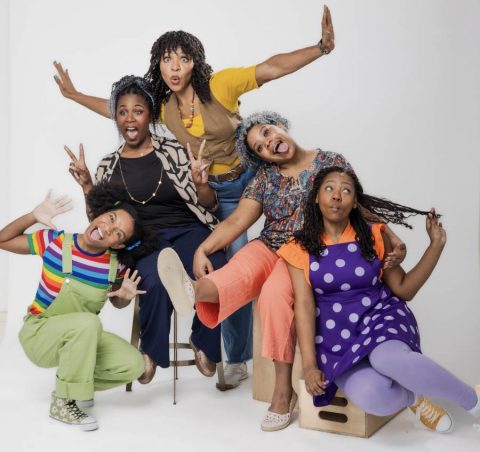
(Laughs). We sometimes forget that children are just little people. They only know what they know and they’re forming their understanding of the world in real time. They’re learning every single day.
What I love about this story is that it gently teaches [its audience] that sometimes you don’t get everything you want. Sometimes, there are sacrifices. And that’s not always a punishment... that’s growth.
Kameeka learns that her world is bigger than just herself. She begins to understand that there are people, like her family and her neighbors, who make her life easier, [but also] that she has the power to show up for them in return. I think that’s incredibly important for young audiences to see.
So often, children are on the receiving end of care, which is beautiful and necessary, but it’s empowering for them to realize that they are part of the ecosystem, too. Their contributions matter. They’re not just being raised they’re participating in community. And when children understand that they have agency within their community, there’s power in that.
How about your hula-hooping skills? Would you say you’re at the level of Kameeka and Jamara?
My hula-hooping skills are very limited. (Laughs). I’ve definitely been learning in rehearsal, and I have improved, but we had a very playful hula-hooping competition one day, and I lost. On a scale of one to ten, I’m a solid two, [but] Kameeka and Jamara are absolute tens. So, I am very happy to be directing this show and not performing in it every day. (Laughs).
In the spirit of the show and in a nod to the source material, what gives you “the itch” — where, like Kameeka and her hula hooping, to quote from the original book, “your fingers start snappin’, your feet start tappin’ [and] your hips start swingin’”?
What gives me “the itch” is the element of play. The hula-hooping is fun, but more than that, it’s that childhood energy of building worlds that pulls me in.
I grew up in Texas, and my mom was not letting me sit inside all day. We were outside climbing trees, playing hide-and-seek, creating games out of nothing.... that kind of imagination sticks with you.
So, watching the young characters onstage build their own world, especially during moments like “The Battle,” where it’s just them — Kameeka, Jamara & Portia, and no adults — it’s pure joy. You get to see their inner lives, their creativity, [and] their rhythm.
And honestly, the music alone in this show gives me “the itch”. It hits immediately. This show just feels alive and that’s what excites me.
Finally, what do you hope to instill in audiences as they come away from this show?
I hope [audiences] leave with joy, with excitement... maybe even wanting to go buy a hula hoop. (Laughs).
I hope that they walk away feeling connected. I want them to recognize that we’re more alike than we are different that every one of us adds value to our communities, to this city, to this country.
This show is really about love and interdependence. It reminds us that we’re stronger together, that we actually need one another.
We hope you leave feeling proud: proud of community... proud of New York... proud of the everyday magic happening right outside your door.
And if young people leave feeling excited to contribute to their community, and adults leave remembering that collective care is powerful, then we’ve done our job. It’s as simple as that.
The Hula-Hoopin' Queen plays Theatre Row (410 West 42nd Street) beginning February 28 and runs through March 15. For tickets and/or more information, click here. For more on Richardson, click here.