




An aging man and woman, both alone in the world, meet in a nursing home and strike up a friendship over a series of games of gin. It might seem like the premise for a sentimental theatrical valentine about how two elderly people, who have been forgotten by the world, find love and companionship with each other. But The Gin Game, written by D.L. Coburn, starring real life married couple Debra Winger and Arliss Howard, is really more like No Exit: a dark psychodrama where hell is other people.
Directed by David Blum, the revival of the play – which won the 1978 Pulitzer Prize for Drama – is being staged at Soho’s Housing Works Bookstore, an incongruous venue for Debra Winger, a legendary actress who has stolen scenes from the likes of Richard Gere and Shirley MacLaine. (Tickets are priced at an amazingly accessible $20.) Ashley Basile (lighting designer) and Sarah Woods (production designer) have convincingly transformed the back of the bookstore into the drab game room of a nursing home with a sagging green chaise, rickety table and cruddy plastic chairs.
In the opening scenes of the play, Fonsia Dorsey, a refined, timid and prim new resident of a middling nursing home, meets Weller Martin, an irascible, wonkish, but affable man. He likes her, or at least, he likes that she’s a breathing woman who isn’t walking away from him at high speed. He assumes he’s smarter than she is and happily teaches her – or rather, mansplains to her – how to play gin.
Weller has only been in the nursing home for a few months, but is already harboring deep suspicions about “them,” and throwing out muttered barbs of resentment about the nursing staff. The place does seem a little saccharine: we can hear infantilizing, hokey activities, like a magic show or a children’s choir, being piped in over the PA system. But the nursing home itself really isn’t the problem; it’s the people.
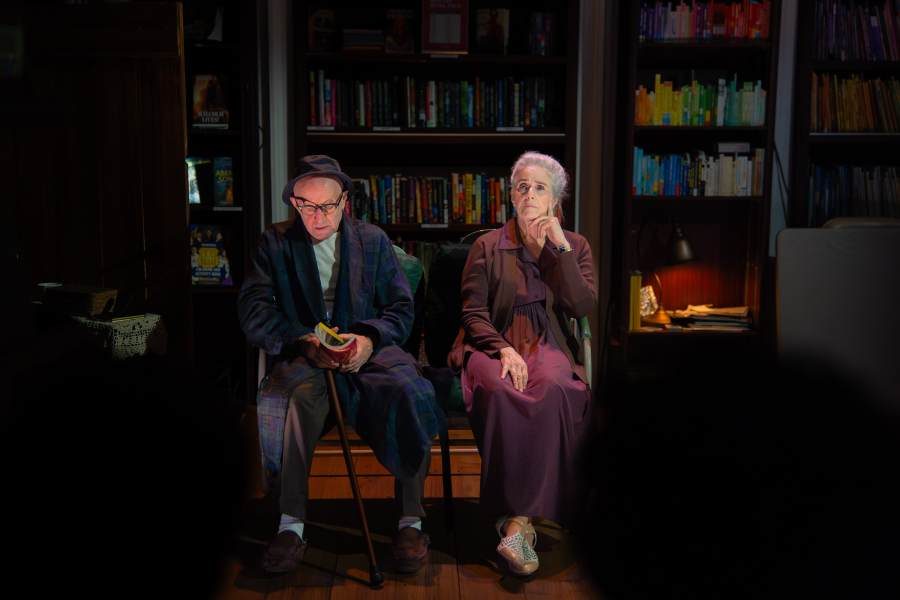
The Gin Game is a psychological thriller, but not the kind where a woman’s ex-boyfriend stalks her, Jodie Foster gets trapped in a panic room, or Matt Damon outsmarts the CIA. The play is, at its core, about the way the patterns we repeat in our closest relationships eventually cloud our ability to see other people as anything more than manifestations of our own unresolved trauma. It’s about how, the more you’re abused, the more everyone becomes your abuser.
The trigger for all of this regurgitated trauma is that Fonsia is miraculously good at gin. She wins every hand she plays against Weller who can't believe he's repeatedly losing to this birdbrain. With each defeat, the scrim of his friendliness is ripped away. He needles Fonsia. He berates her for her unbelievable luck. When she deliberately tries to lose just to make him stop, he savagely tears into her for patronizing him. None of this, of course, is really about gin rummy.
In the rare moments of warmth between them, Weller confides that he was pushed out of the marketing company he built himself by deceitful younger rivals. Given that Weller has an oversized ego, a volatile temper and a need to dominate, it’s clear to us, if not him, that he was part of the problem. But Weller, disappointed and angry, does know that he’s lived a smaller life than he might have. Fonsia, meanwhile, gradually reveals pieces of herself, admitting that she could never live up to the expectations of her decent but strict, rigid Methodist father and that she was married to an abusive husband. She only tells Weller these things in the moments where he’s coaxed or manipulated her into lowering her guard. Weller and Fonsia are trapped in their own cycles of misery, but each embodies for the other the archetype that has haunted them for decades. For Fonsia, Weller becomes her strict father, her abusive ex-husband, and every man whose approval she has ever desperately craved. To Weller, Fonsia represents all the slicker, younger people who have taken advantage of him.
One curious feature of The Gin Game is how quickly Weller and Fonsia achieve a kind of unearned intimacy. They seem to skip over the long process of getting to know each other and arrive, after just a few weeks, at the point where they can inflict savage personal wounds. (If my last relationship is any indication, that usually takes about six months.) In fact, Weller Martin and Fonsia Dorsey don't really know each other at all. What they know are their own psychological boogeymen. It's not hard to hate someone once you see them as a stand-in for the family member who disappointed you. From there, we’re off to the races - maximum intimacy, borne of maximum projection.
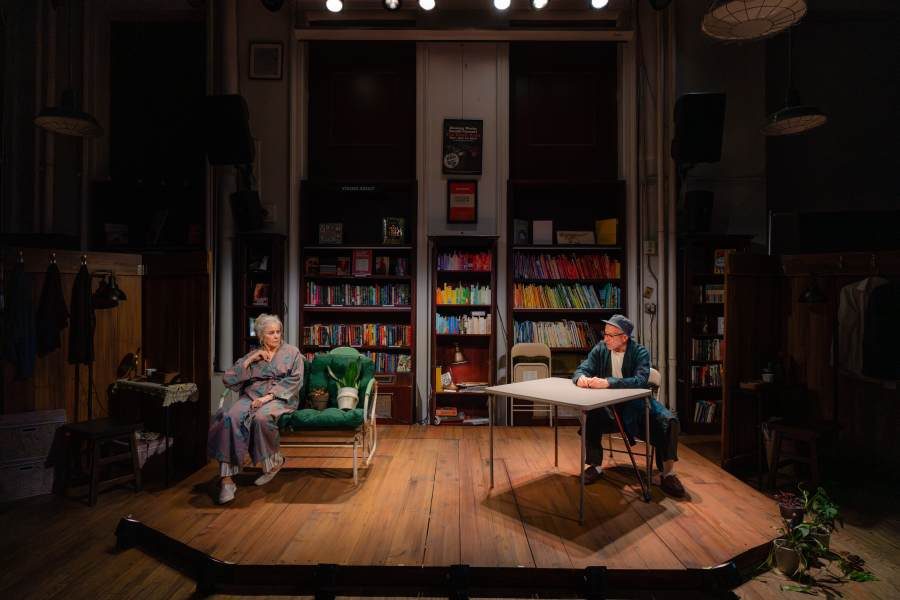
Not surprisingly, Howard and Winger, who have been married for 31 years, have great chemistry. (Actually, after 31 years, that’s very surprising.) Howard has more to work with than Winger; the role of Weller is stronger and more evocative. Howard brilliantly combines physical frailty – a man who seems increasingly disconnected from his own body – with an unnerving sense of unpredictability. As you watch the play, you are genuinely scared that Weller is going to attack Fonsia with a lifetime’s worth of impotent rage, even though he seems like he can barely tuck in his shirt. Debra tWinger, meanwhile, playing a tamped down woman, does a lot with the somewhat underwritten Fonsia, who is polite, reserved, and almost girlish at times despite being in her seventies. Winger - whose greatest strengths have always been her empathy, vitality, and vulnerability – plays Fonsia with an almost vacant quality, but her rare startling flashes of retaliatory cruelty make it clear that she’s not just Weller’s victim in this psychological dance, but his partner. By Weller's third outburst, any reasonable person would say, "I'm not playing gin with you anymore. You're scaring me." So why does Fonsia keep coming back? As any therapist could tell you, we keep reenacting the same dynamics because they are familiar. The people who wounded us shape the people we're drawn to, even when those relationships promise only more pain. That's what a true psychological thriller is made of. It isn't about the killer lurking behind the shower curtain. It's about how a simple game of gin rummy reveals our inability to move beyond the bad hand we feel life has dealt us.
https://www.thegingameplay.com/
With Debra Winger & Arliss Howard
Directed by David Blum
Original Play by D.L. Coburn
Stage Manager: Josie Cooper
Casting: Erica A. Hart
Scenic Design: Ashley Basile
Lighting Design: Sarah Woods
Sound Design: Bart Fasbender
Costume Design: Michael Schaffner